When Meles Zenawi, Ethiopia’s leader of more than 20 years, died in August 2012, many anticipated significant and potentially destabilizing change. Past political transitions in Addis Ababa had been violent and settled at the barrel of the gun, so the precedents were worrisome. Meles’ eulogies emphasized his individual brilliance and his personal role in bringing development to the modern Ethiopian state. What would happen with the strongman gone? Could the strong and effective authoritarian developmental party-state engineered under Meles’ leadership sustain itself without him?
Instead of instability, the ruling Ethiopian Peoples’ Revolutionary Democratic Front (EPRDF) quickly moved Deputy Prime Minister Hailemariam Dessalegn into the leadership spot without public drama or fuss. Meles’ Growth and Transformation Plan (GTP) remains the party’s guiding policy document, and key initiatives such as the Grand Renaissance Dam are moving forward steadily. Ethiopia was never a one-man dictatorship, but was characterized by a strong authoritarian ruling party with deep links among the security forces, regional administrations, mass organizations and party-affiliated enterprises. The EPRDF is key to understanding Ethiopia’s stability and the regime’s ability to remain in control of a diverse country of some 90 million, divided into a complex set of ethnic groups, in a poor region that suffers terrible levels of conflict.
The EPRDF is ubiquitous in ethiopia. It dominates the country through a network of political, military, economic and social organizations where the lines between party and state, party and military, party and business, and party and nongovernmental organization are blurred. Since 1991, the EPRDF has controlled all levels of government from the federal to the regional, including all levels of judicial, legislative and executive authority, and it is difficult to separate the EPRDF as a party from the EPRDF as the government. Patronage has been a key part of the party’s strength, and state resources such as development programs, access to higher education and civil service jobs have been used to reward supporters and punish opposition. The EPRDF controls a vast set of businesses through its party-based holding company, the Endowment Fund for the Rehabilitation of Tigray (EFFORT). The party also controls newspapers, radio stations and mass organizations such its Youth League, Women’s League and Confederation of Ethiopian Trade Unions. Most importantly, the ruling party that began as an armed movement retains tight control over the military and security services. The EPRDF is more than just a political party, and its ability to embed itself in a network of state, private business, mass organization and party institutions makes it formidable. This network of linked centers of power is key to Ethiopia’s extraordinary authoritarian stability.
Ethno-nationalism and the Historical Legacies of Armed Struggle
The EPRDF has its origins in the protracted civil war in which liberation fronts mobilized around ethnic identities fought and, in 1991, ultimately defeated Mengistu Haile Mariam and his brutal military regime. The Tigray People’s Liberation Front (TPLF) led the insurgency and came to power with high levels of solidarity and cohesion, considerable experience in administering liberated zones in the north and the legitimacy that came from winning the war. In the final years of the war, the TPLF formed the EPRDF coalition to bring in armed wings from outside of the Tigray homeland, notably the Amhara and Oromo. The Amhara National Democratic Movement (ANDM), the Oromo People’s Democratic Organization (OPDO) and later the Southern Ethiopian People’s Democratic Movement (SEPDM) joined the EPRDF. The exigencies of turning into a ruling party required that the northern-based EPRDF find ways to incorporate the many diverse and traditionally marginalized groups in the south while simultaneously retaining its hierarchical structure of top-down control.
In one of its first acts after seizing power, the EPRDF restructured the Ethiopian state into a federation of nine ethnically defined regions and two chartered cities. The ethnically defined wings of the coalition ruled their respective ethnically defined regions. In other words, the Oromo wing ruled the Oromo region, the Amhara wing the Amhara region and so forth. The victorious rebel movement de-emphasized Ethiopian nationalism and argued that the state could only survive if group rights were made the central organizing principle. Rather than emphasizing national unity, the EPRDF boldly—some say recklessly—chose to construct a political system that reflected the aspirations of many in both the northern Tigrayan heartland and the historically marginalized south. The impact of this new dispensation has been profound; it transformed the old social hierarchy that historically favored northern highland groups such as the Orthodox Amhara and Tigrayans while marginalizing the Oromo and other largely Islamic groups in the southern lowlands.
While ethno-federalism and group rights provide the basic constitutional framework of the EPRDF-constructed state, most policy planning and financial resources remain highly centralized. The party retains the top-down, democratic centralism that is part of its legacy from its days as a victorious insurgent group. Addis Ababa provides yearly subsidies to each regional government, thereby creating dependence on central patrons. As a result, programs and expenditures are determined by central rather than local priorities.
However, while the regional states rely upon the center for legitimacy, security and resources, they also control substantial bureaucracies and budgets and have a degree of political autonomy. It is not the EPRDF as a national coalition but rather constituent ethnic parties that control the regional institutions and resources. Rather than merely implementing the wishes of the center, the regional states also possess significant political infrastructure and are the day-to-day face of the state for most rural Ethiopians. Ethno-federalism and democratic centralism have created a system with an inherent tension between autonomy and hierarchy.
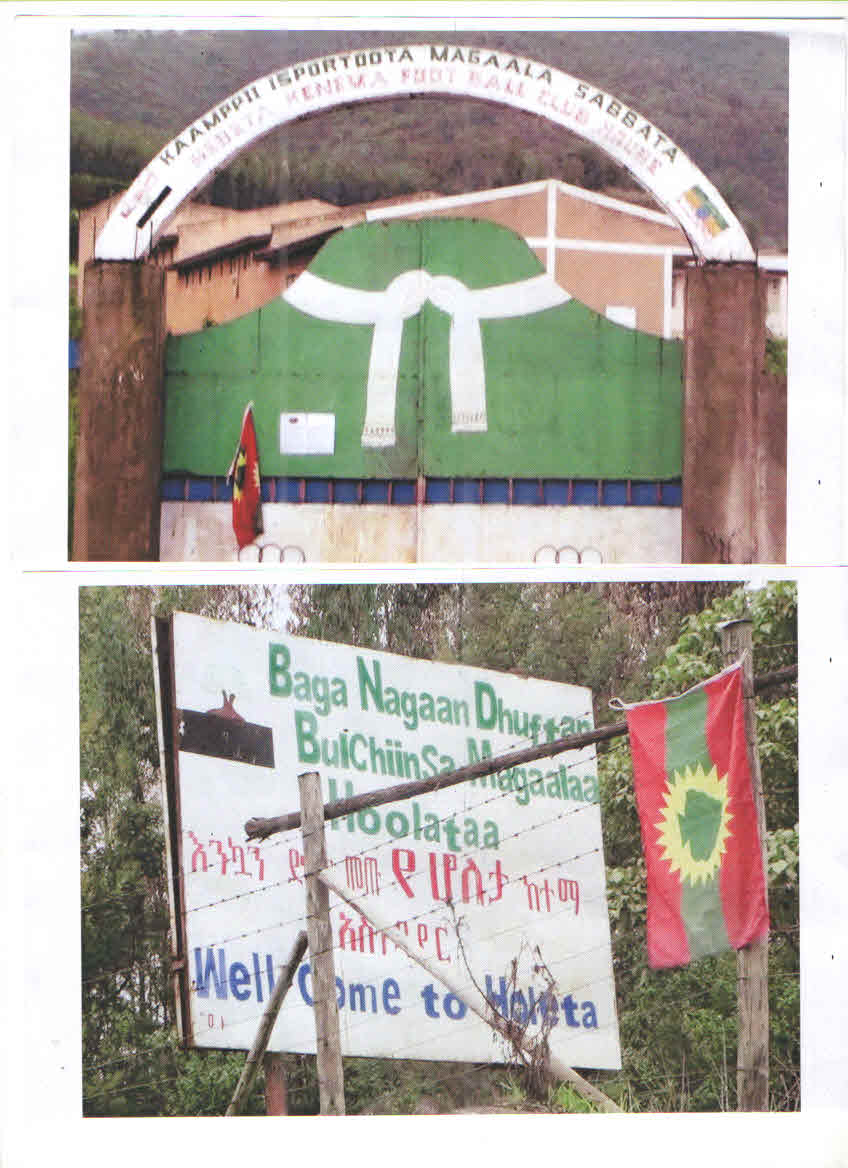
The Amhara National Regional State (ANRS) illustrates the potential for regional states to develop institutional autonomy and direct links to the population. The Amhara wing of the EPRDF, the ANDM, controls every elected office in the state. ANRS is the second-largest regional state in Ethiopia, with a population of 17 million. It has its own constitution, its own elected council, regional bureaus of transport, health and education, its own system of courts and prisons, and so forth. There are long lines of farmers waiting to make their cases to regional court officials to adjudicate land disputes, indicating that authority to decide issues fundamental to everyday life is located in the regional state. The Administration and Security Bureau has built a 100,000-member local militia in the rural areas—“almost a regional army,” according to one ANRS official. Residents of the region are linked to the Amhara state, as distinct from the central Ethiopian state, in numerous ways. They carry ANRS ID cards and driver’s licenses, pay ANRS taxes, listen to Amhara radio and watch Amhara TV, support Amhara sports teams against rivals from Oromo or Tigray and identify with the ANRS flag that flies over regional government buildings.
The EPRDF has thus dominated Ethiopian politics since the transition in 1991 through a system that is structured around two tendencies that are in tension consistent with its heritage as a successful insurgency. It is a vanguard party, highly centralized and hierarchical, with policy decisions and resources concentrated at the top and with loyal administrators at the grassroots level. At the same time, however, the EPRDF is a coalition of disparate constituent parties with significantly different legacies and abilities to mobilize. It is a highly effective authoritarian regime, but the tensions between centralization and autonomy create the potential for deep fissures.
The Developmental State
The policy focus of the EPRDF has been on building a developmental state on the Chinese model and promoting the reduction of poverty and movement toward the U.N. Millennium Development Goals through state-led investments. The economy grew by more than 10 percent annually over the past decade, and rapid growth has been key to Ethiopia’s stability. The results are clear, from new housing complexes along the beltway that goes around Addis Ababa to new regional universities in dozens of smaller cities and a significant investment in rural healthcare. Trade and investments from China, India and Turkey are on the rise.
Despite this impressive growth, Ethiopia remains one of the poorest countries in the world, with a per capita annual income of $410. Furthermore, Ethiopia has one of the highest rates of population growth, making economic expansion critical. Yet, though Ethiopia’s economic growth remains higher than the African average, it has slowed in recent years. Plans for significant exports of electricity will be important in coming years, but the massive hydroelectric projects currently underway are controversial with environmentalists and neighboring states. The World Bank has also raised concerns that Ethiopia’s boom has relied too heavily upon public investment and that sustained growth will require a significant increase in private investment.
Ethiopia is currently in the middle of its five-year (2010-2015) Growth and Transformation Plan. This plan is extraordinarily ambitious and has been compared to China’s Great Leap Forward. According to the GTP, Ethiopia aims to double the size of its economy in five years and vastly expand its road, railroad and other infrastructure in order to meet all Millennium Development Goals. Ethiopia’s authoritarian stability over the past decade has relied upon an unprecedented level of economic expansion. A regime that faced a stagnant economy and an inability to deliver on the GTP’s lofty promises might face a crisis of confidence and instability.
Electoral Authoritarianism
The EPRDF is a strong authoritarian regime that has used the institutions of constitutionalism, rule of law and democracy to retain its control. The regime defines itself as a revolutionary democracy, not a liberal democracy, and insists that this form of governance is more appropriate for Ethiopia’s level of development. It positions itself as the sole legitimate party that represents the interests of the peasants, making it the natural vanguard of the largely rural country. Ethiopia has held a series of elections since 1991, but with the notable exception of the national election in 2005, none have been contested. A combination of EPRDF use of state resources and repression on one hand, and boycotts by the opposition on the other, left the overwhelming majority of Ethiopian voters without meaningful choice. While these elections have not been competitive, they have played fundamental roles in the consolidation of the ruling party’s power. Elections have been instrumental in the marginalization of key opposition parties, and high turnout suggests the party’s ability to mobilize the population.
The 2005 election, in contrast, provided most Ethiopian voters with a meaningful choice, providing a window into quite diverse political opinions that are otherwise difficult to gauge under conditions of single-party authoritarian rule. According to official results, the combined opposition increased its number of seats in parliament from 12 to 172, representing 31 percent of the total seats. This startling shift represented the potential for an important advance in democratization. Some key members of the opposition, however, refused to accept the results and claimed that massive fraud had denied them outright victory. Demonstrations in October 2005 were brutally put down by the Ethiopian military, leaving nearly 200 dead. The regime arrested many top opposition leaders, as well as an estimated 30,000 students and other presumed opposition supporters. The election period had begun with considerable excitement that peaceful change was possible but ended with the closing of political space and the criminalization of dissent.
The EPRDF responded to this challenge by demonstrating its extraordinary strength in using the levers of state power and its considerable organizational capacities to dominate all aspects of political life. In combination, the Anti-Terrorism Proclamation and the Charities and Societies Proclamation of 2009—known as the CSO law—largely eliminated what were already weak newspapers and fledgling civil society institutions. The anti-terrorism law has been used to arrest many independent journalists and to make public discussion of key public policy issues dangerous. The CSO law restricts the ability of organizations working on human rights, democratization and conflict resolution to obtain more than 10 percent of their funds from foreign sources, leading to the collapse of virtually every nongovernmental organization working in these sectors.
The ruling party also flexed its muscle by engaging in a massive recruitment drive that expanded membership nationwide from 760,000 in 2005 to 6.5 million by 2013. As a result of these moves, the EPRDF set the stage for elections in 2010 that it would win by more than 90 percent of the votes, a return to patterns seen in 1995 and 2000. The polls resulted in the EPRDF and affiliated parties winning 545 of 547 seats, or 99.6 percent, in the parliament. Even more remarkable is that, in local elections in 2013, as a result of a boycott by the opposition, only a single opposition candidate won one of the more than 3.5 million seats.
These overwhelming victories are an indication that the authoritarian regime used elections to demonstrate its domination rather than its ability to win a contested election. As the 2005 election results suggest, the top leadership of the ruling party risks its hold on office if it allows for electoral competition. But the astonishing margins of victory in 2010 and 2013 create credibility problems for the EPRDF in North American and European capitals, where diplomats are often heard to say, “Couldn’t they have just won by 60 or 75 percent?” But the point of these elections under authoritarian rule is not to obtain a working majority or to win international approval, but to dominate domestic politics completely and thereby deter any leader from within or without the ruling party from thinking he or she could challenge this extraordinarily effective party. The 99 percent victories send an important domestic message of strength and power, even as they strain credibility abroad.
A Controlled Leadership Transition
Following the 2010 election and the collapse of organized political opposition, the EPRDF launched a process of controlled, internal party transition. A number of leaders from the original insurgent leadership retired, and a new generation of younger leaders was promoted. Leadership transition, however, is inherently a difficult process in which power and authority are in flux as different individuals and factions of parties rise and fall. In Ethiopia this is further complicated because each individual promotion or retirement reflects on the relative power of that individual’s ethnic party and ethnic region. Each of the ethnic parties believe it is “their turn” to benefit from national leadership and do not want to wait for the next transition, in perhaps another 20 years, to have their time at the top. ANDM and OPDO representatives reportedly ask quite pointed questions at closed EPRDF meetings about when their respective parties will receive a greater share of top positions. As a coalition of ethnically defined parties, any change in top EPRDF leadership will shift the distribution of power among the ethnic groups.
This need to maintain ethnic balance in top leadership positions was again seen in the ethnic and party affiliations of those who filled the key posts distributed after Meles’ death in 2012. Hailemariam, who moved from deputy prime minister to prime minister, is from the Wolayta ethnicity, a small and historically marginalized group in the south, and is an evangelical Christian. The symbolism of this is remarkable—the Ethiopian state that had been ruled by northern, Orthodox Christians for centuries now has a southern evangelical Christian head of state. In order to broaden the base of support for the new leadership, three new deputy prime ministers were named. The importance of balance within the EPRDF is apparent from the choices: While Hailemariam is from the SEPDM, Demeke Mekonnen is from the ANDM; Debretsion Gebremichael is from the TPLF; and Muktar Kedir is from the OPDO. In this moment of transition, all four ethnic constituent parties in the EPRDF coalition required a seat at the table. The authoritarian regime has maintained stability without resolving its tensions and leaves the field unresolved in the lead-up to elections in 2015.
The Political Opposition
The political parties that challenged the regime in 2005 have shattered and now play virtually no role in national politics. Repression and the application of anti-terrorism laws, as well as weak structures and leadership, limit the opposition’s ability to operate as political parties within Ethiopia. The Semayawi, or Blue, party aims to mobilize a new, younger generation of supporters, and has organized several small demonstrations, but there is little to indicate that it will challenge the EPRDF’s hold on power.
The Ogaden National Liberation Front (ONLF) and the Oromo Liberation Front (OLF) remain engaged in protracted armed struggles, but the regime has readily managed these challenges. Oromo nationalist sentiments remain strong, particularly in the diaspora, but the OLF leadership is divided and ineffective, and its military is largely absent and hobbled by its relationships with Eritrea. The EPRDF regularly arrests Oromos and accuses them of links to the OLF and to terrorist plots. The ONLF has suffered from a brutally effective counterinsurgency campaign in the Somali-speaking Ogaden region. Promising talks between the ONLF and Ethiopia broke down in 2012, and in January 2014 the ONLF claimed that two of its top leaders had been kidnapped in Nairobi and taken incommunicado to Addis Ababa. As new potential energy resources are developed in the Ogaden region, Ethiopia will face new challenges in building sustainable stability there.
While the EPRDF has virtually closed political space, mobilization among Ethiopian Muslims provides an example of a new form of politics. Muslims, who represent approximately 40 percent of the population, historically have been marginalized in a country whose elites have been Christian. Demonstrations were organized in 2012 to protest government interference in Islamic affairs and leadership struggles within the Ethiopian Islamic Affairs Supreme Council. The movement’s leadership was arrested in July 2012, and the regime has suggested that the demonstrators are linked to Islamic extremists and external funding. Some reports suggest that the regime would like to reduce tensions with Muslims and would release the leadership if they requested pardons, but the leaders are unwilling to recognize the charges as legitimate.
These demonstrations have been extraordinarily disciplined and, in contrast to the violence and massive crackdown in 2005, the Muslim protesters have made it difficult for the security forces to credibly characterize them as “terrorists”—although the regime has tried. The movement frames its demands in the language of the Ethiopian constitution and underlines its indigenous origins and leadership. It is difficult to forecast how or whether the movement will have any direct role in any future transition, but its resilience suggests that nonpartisan social mobilization may have greater potential than formal electoral opposition parties.
Prospects for Transition
The powerfully effective networks that link the ruling EPRDF coalition and the state have sustained authoritarian stability in Ethiopia since 1991. This power is seen in the ruling party’s ability to mobilize millions in noncompetitive elections. The ruling coalition has benefited from a period of rapid economic growth and an opposition that was often divided and at times missed opportunities. The EPRDF has also put in place a set of laws that have greatly restricted the ability of civil society organizations and independent media to operate, further limiting any checks on its power.
The EPRDF’s strength, however, is simultaneously a source of brittleness. The lack of space for dissenting voices, for the development of alternative policies or for channeling discontent into constructive forms of political dialogue and competition has resulted in a population that has acquiesced to the formidable power of the incumbent. This acquiescence, however, could evaporate quickly if the regime seems to weaken or lose its access to patronage. Acceptance of the ruling party is also enforced through highly effective mechanisms of repression against the opposition. If the regime stumbles, then the veneer of support may fall away, quickly leaving a vacuum that will encourage a violent scramble to gain the upper hand in the transition. Authoritarian regimes without significant constituencies are not stable in the long run. Longevity should not be mistaken for resilience.
Terrence Lyons is associate professor of Conflict Analysis and Resolution and co-director of the Center for Global Studies, George Mason University.
Source: World Politics Review February 19, 2014
 New satellite imagery shows extensive clearance of land used by indigenous groups to make way for state-run sugar plantations in Ethiopia’s Lower Omo Valley, Human Rights Watch and International Rivers said today. Virtually all of the traditional lands of the 7,000-member Bodi indigenous group have been cleared in the last 15 months, without adequate consultation or compensation. Human Rights Watch has also documented theforced resettlement of some indigenous people in the area.
 The imagery also shows the impact of a rudimentary dam built in July 2012 that diverted the waters of the Omo River into the sugar plantations. Water rapidly built up behind the shoddily built mud structure before breaking it twice. The reservoir created behind the dam forced approximately 200 Bodi families to flee to high ground, leaving behind their crops and their homes.
 Tension remains high in northern Moyale following renewed inter-ethnic clashes on Sunday night between Borona, Gabra and Burji and left thousands of families displaced.